Things about Liquid Chromatography Tandem Mass Spectrometry
Table of ContentsNot known Details About Liquid Chromatography Tandem Mass Spectrometry Liquid Chromatography Tandem Mass Spectrometry Can Be Fun For AnyoneThe Facts About Liquid Chromatography Tandem Mass Spectrometry Uncovered8 Easy Facts About Liquid Chromatography Tandem Mass Spectrometry ExplainedFacts About Liquid Chromatography Tandem Mass Spectrometry Uncovered
If both genetics are precisely similar, they will certainly spend more time in the stationary stage, as well as elute from the column much more gradually. If the genetics differ even by a solitary nucleotide, nevertheless, they will certainly spend even more time in the mobile phase, and also leave the column much more quickly.Y chromosome analysis is among the most effective molecular tools for mapping human evolution.
Electrochemical Good Excellent Electric currents are found that are created by electric oxidation-reduction responses. Electrically active components are identified with high sensitivity.
Introduction to HPLC High Efficiency Liquid Chromatography (HPLC) is a process of separating parts in a liquid combination. A fluid sample is injected right into a stream of solvent () flowing with a column loaded with a splitting up medium (). Experience components separate from each other by a process of as they move via the column.
Liquid Chromatography Tandem Mass Spectrometry Can Be Fun For Everyone
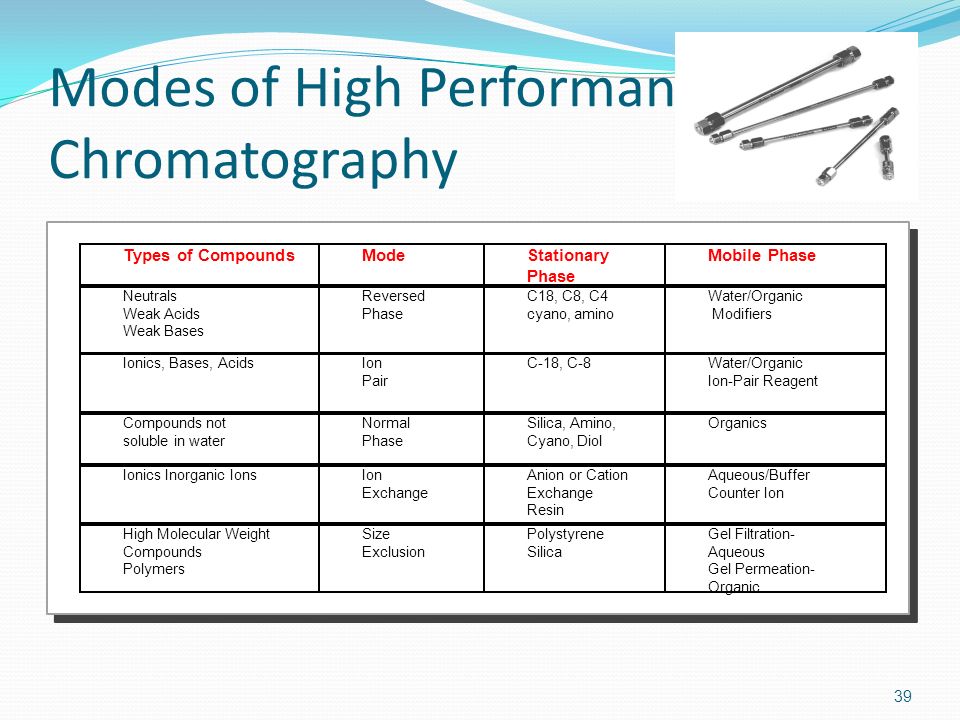
In concept, "like dissoves like". Such a column will tend to preserve example components which are also hydrophobic, as long as the mobile phase is not more powerful in its attraction for that sample component. A lot more polar sample components will have a tendency to elute from the column much faster because they are maintained to a lower degree.
Articles from Northern Clinics of Istanbul are given here courtesy of
Stationary phase is a fluid or solid material that is repaired in a chromatography system - liquid chromatography tandem mass spectrometry. The buildings of the mobile stage and also the fixed stage are opposite of each other and enable for the partitioning of analytes as the mobile phase as well as test blend circulation via or over the stationary stage ().
The Of Liquid Chromatography Tandem Mass Spectrometry
The function for splitting up drops right into two classifications: preparative chromatography or analytical chromatography. Preparative chromatography is my blog utilized to different compounds for later seclusion or filtration which after that can be utilized in various other procedures. Analytical chromatography is utilized in quantitative and also qualitative analysis of complicated mixes. Chromatography procedures are further split right into two significant classifications (liquid or gas chromatography) based upon the structure of their mobile stage part.
Mixtures are warmed as well as evaporated in a shot port look here and also are relocated via or across a stationary stage to different compounds prior to reaching a detector that offers information on focus or identity of elements. Gas chromatography is predominately used for analytical methods, rather than primary approaches. In fluid chromatography (LC), substances are divided by liquifying an example into a liquid mobile stage which is after that overlooked a solid fixed stage. liquid chromatography tandem mass spectrometry.
As time proceeds the spots of a combination travel up with capillary action with the thin layer of solid stage, which divides into bands of compounds (). Column chromatography uses columns layered or jam-packed with fixed phase. Taste mixture and mobile phase streams via the column and also over the stationary stage to elute substances in time.
After the information is tape-recorded the mobile phase and eluent typically winds up as waste for an analytical system site or can be individually accumulated for usage in a prep chromatography system. The information produced is often stood for as heights or patterns that match to divide elements in a mixture revealed over time.
Some Known Incorrect Statements About Liquid Chromatography Tandem Mass Spectrometry
The retention time is the amount of time it takes for an analyte to travel through the system from injection to discovery. Retention times change with different conditions such as p, H, temperature and also stationary stage type, column dimensions, and mobile phase or solvent compositions (liquid chromatography tandem mass spectrometry). The mobile phase or solvent make-up is a vital element of chromatography.
An essential idea of fluid chromatography is polarity. Polarity takes place in particles and also remedies when there is either a substantial distinction accountable, electronegativity, or ionic bonds causing high dipole moments (large differences in charge). Molecules or solvents with high dipole moments are polar whereas molecules or solutions with equal sharing of bonds (covalent or polar covalent) have little to on the house as well as are nonpolar.
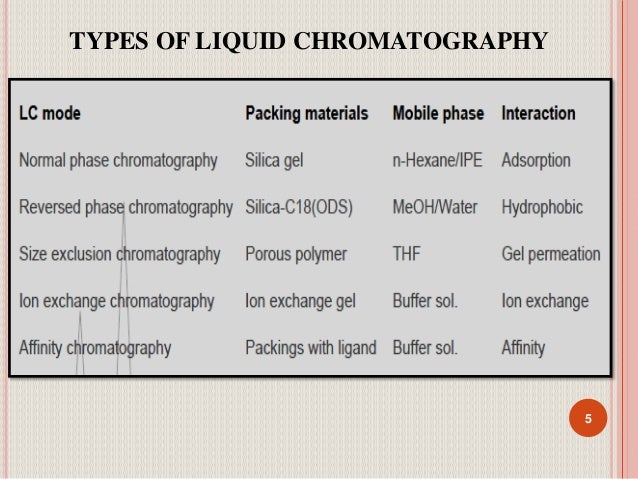
The higher the polarity index, the extra polar the solvent (). Very early chromatography was dominated by what is currently called typical stage fluid chromatography (NPLC) or adsorption chromatography where the mobile stage contained a nonpolar solvent such as hexane while the fixed phase was made up of polar materials such as silica.
Analytes for reversed-phase LC often tend to be a lot more hydrophilic as well as polar than analytes studied by NPLC. The ability of a solvent or mobile phase to pull analytes from the fixed phase or adsorbent is called its eluent toughness, elution power or eluotropic worth (0) and depends on the polarity of the mobile stage as well as the stationary stage.
Some Of Liquid Chromatography Tandem Mass Spectrometry
Generally, the solvents are comparable in their polarity with distinctions in possible elution toughness. In all situations the solvents need to work and also miscible. Miscibility is the capacity of options to mix together in all percentages to create an uniform solution. In lots of circumstances, polar as well as nonpolar solvents are immiscible or incapable to develop an uniform option ().